
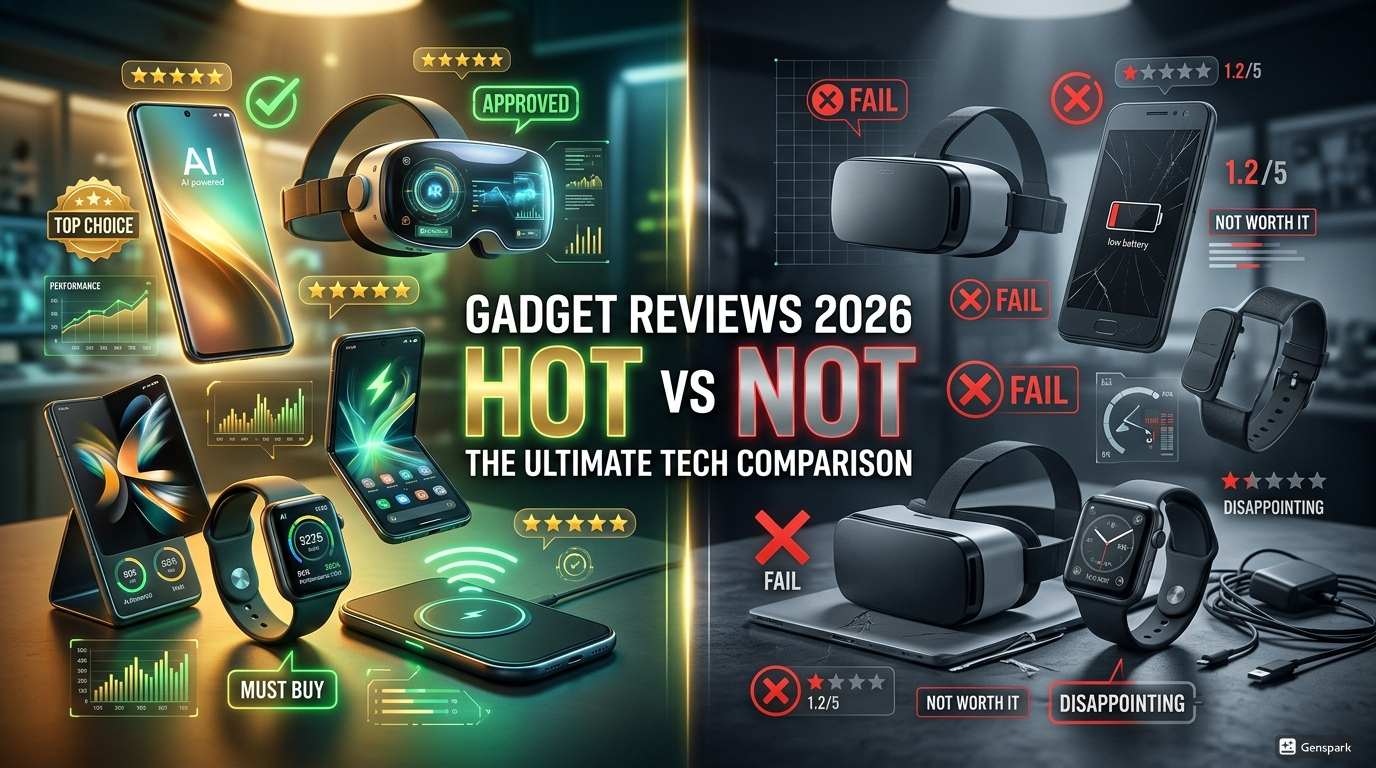
Introduction: Understanding the Gadget Landscape in 2026
The world of gadgets in 2026 is more advanced, competitive, and diverse than ever before. Every year, manufacturers introduce new devices with upgraded features, improved performance, and smarter capabilities. From smartphones and laptops to wearables and smart home systems, technology is becoming deeply integrated into everyday life.
However, with so many options available, choosing the right gadget has become increasingly difficult. Not every new release is worth your money, and not every trending product delivers real value. This is where thoughtful, real-world gadget reviews become essential. They help users separate hype from practicality and make informed decisions based on actual performance, usability, and long-term value.
What’s Hot in 2026: Trends That Truly Matter
In 2026, certain technological trends are genuinely transforming how gadgets function and how users interact with them. One of the most significant developments is the rise of artificial intelligence in everyday devices. Modern gadgets are no longer just tools—they are becoming intelligent assistants. Smartphones can now adapt to user behavior, optimize battery usage automatically, and provide personalized recommendations. Similarly, laptops and smart devices are using AI to enhance productivity, security, and overall user experience.
Another major trend is the growing popularity of foldable and flexible displays. Unlike earlier versions that struggled with durability, today’s foldable devices are more reliable and practical. They offer the convenience of a compact device while providing a larger screen when needed, making them especially useful for multitasking and entertainment.
Wearable technology has also evolved significantly. Devices such as smartwatches and fitness trackers now go beyond basic step counting. They provide advanced health monitoring features, including heart rate tracking, sleep analysis, stress management, and even early warning signs for certain health conditions. This shift is turning wearables into essential tools for maintaining a healthy lifestyle.
Smart home technology is another area experiencing rapid growth. Homes are becoming more connected, with devices that can be controlled through voice commands or mobile apps. Lighting, security systems, and appliances can now work together seamlessly, improving convenience, energy efficiency, and safety.
What’s Not Living Up to Expectations
Despite the exciting advancements, not every gadget lives up to its promises. One common issue in 2026 is the trend of expensive flagship upgrades that offer only minor improvements over previous models. Many users find themselves paying a premium price for changes that do not significantly impact everyday usage.
Another area of concern is the inclusion of overly complex or unnecessary features. Some gadgets are loaded with functions that sound impressive in marketing campaigns but provide little real-world benefit. These features can make devices harder to use rather than improving the user experience.
Battery life continues to be a challenge for certain high-performance devices. While processing power and display quality have improved, some gadgets still struggle to last a full day under regular usage. This creates a gap between expectations and actual performance, especially for users who rely heavily on their devices throughout the day.
What’s Worth Your Money: Finding True Value
When it comes to spending money on gadgets, value is more important than hype. In 2026, many mid-range devices offer performance levels that were once limited to premium products. These gadgets provide a balanced combination of speed, features, and affordability, making them a smart choice for most users.
Laptops designed for everyday productivity are also offering excellent value. They are lighter, faster, and more energy-efficient, making them suitable for students, professionals, and remote workers alike. Similarly, practical wearables that focus on accurate tracking and long battery life tend to be more useful than feature-heavy models that sacrifice reliability.
Smart home devices that integrate well with other products are also worth considering. Instead of buying multiple disconnected gadgets, investing in a system that works together smoothly can enhance both convenience and efficiency.
Key Factors to Consider Before Buying a Gadget
Before purchasing any gadget, it is important to evaluate several key factors. Performance should always be a top priority, as it determines how smoothly the device will handle daily tasks. A gadget that looks impressive on paper but struggles in real-world usage is not a good investment.
Battery life is another critical factor. A device should be able to last through your typical day without constant charging. Usability also plays a major role. A gadget should be intuitive and easy to operate, even for users who are not highly tech-savvy.
Price and value must be carefully balanced. The goal is not to find the cheapest option, but to choose a product that offers the best combination of features and performance for its price. Durability is equally important, as a well-built device will last longer and provide better long-term value.
The Pros and Cons of Modern Gadgets
Modern gadgets bring many advantages. They improve productivity by automating tasks and providing faster access to information. They enhance connectivity, allowing users to stay connected with others and access services from anywhere. They also offer personalized experiences, adapting to individual preferences and habits.
However, there are also downsides to consider. The rapid pace of innovation often leads to frequent upgrades, which can be costly. Premium devices can be expensive, and not all users need their advanced features. Additionally, compatibility issues between different devices and platforms can sometimes create frustration.
Conclusion: Making Smarter Gadget Choices
In 2026, the best gadgets are not defined by their price or popularity, but by how well they meet your needs. Understanding current trends, recognizing marketing hype, and focusing on real-world performance can help you make better decisions.
A smart buyer looks beyond flashy features and considers long-term usability, reliability, and value. By doing so, you can invest in gadgets that genuinely improve your daily life rather than simply following trends.
👉 The key is simple: choose technology that works for you—not just what’s trending.
Frequently Asked Questions (FAQs)
Q1: What types of gadgets are most popular in 2026?
Gadgets featuring AI capabilities, smart home integration, advanced wearables, and foldable displays are among the most popular.
Q2: Are high-end gadgets always worth the price?
Not necessarily. Many mid-range gadgets now offer similar performance at a lower cost, making them a better value for most users.
Q3: How can I choose the right gadget for my needs?
Focus on your usage requirements, compare features, and prioritize performance, battery life, and usability.
Q4: Why is battery life so important?
Battery life directly affects how convenient and reliable a device is for daily use.
Q5: Should I upgrade my gadgets every year?
Frequent upgrades are not necessary unless your current device no longer meets your needs.
Q6: What are the biggest mistakes people make when buying gadgets?
Common mistakes include following trends blindly, ignoring reviews, and paying for features they don’t need.
Q7: Are smart home gadgets worth investing in?
Yes, if they are compatible and provide real convenience, security, or energy savings.
Q8: What defines a good gadget in 2026?
A good gadget offers reliable performance, useful features, strong battery life, and good value for money.

