
Introduction
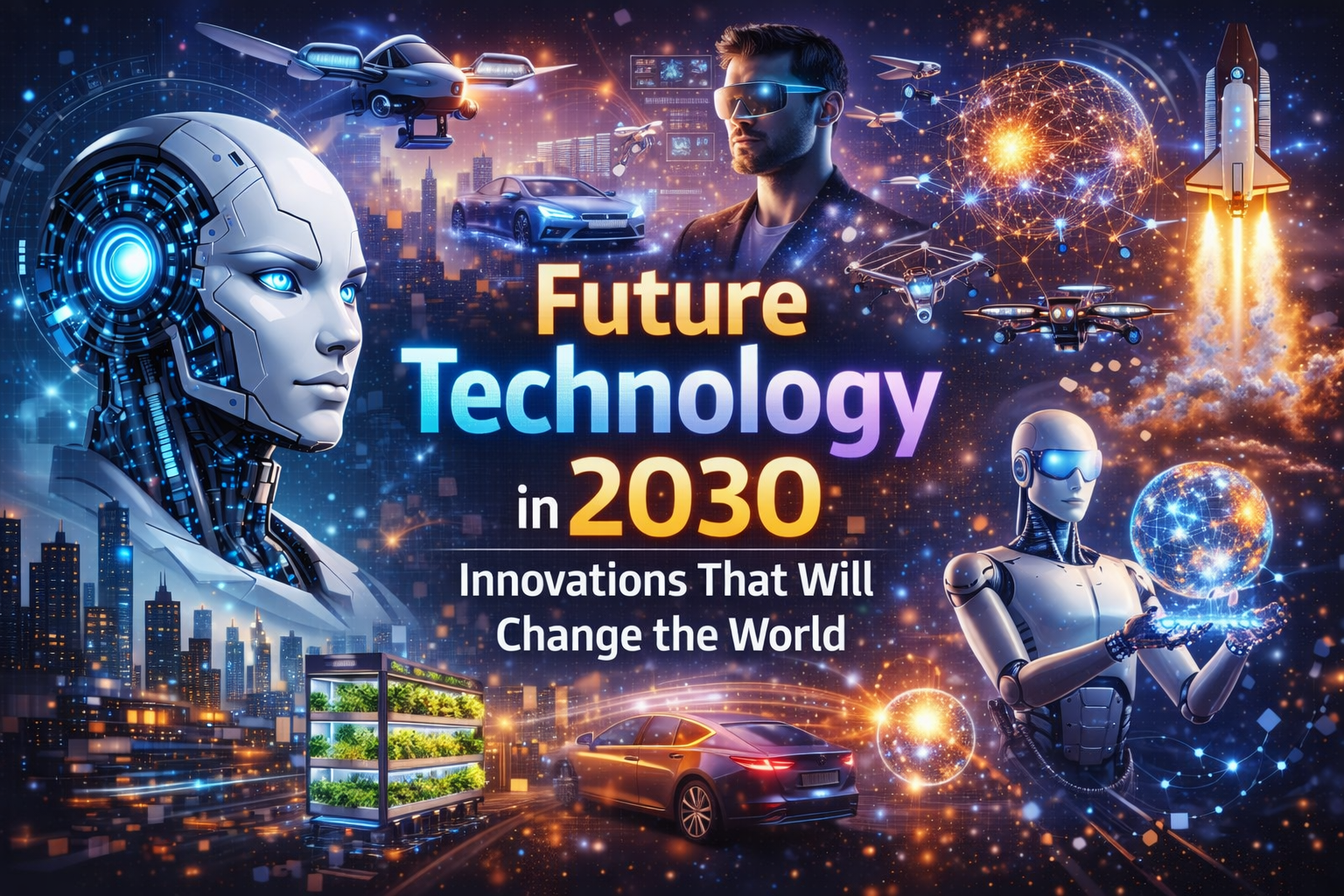
The world is entering a new era of rapid technological transformation. By 2030, advancements in artificial intelligence, connectivity, biotechnology, and computing will reshape how we live, work, and interact with the world around us. What once seemed like science fiction is quickly becoming reality.
From self-driving transportation to intelligent healthcare systems, future technologies promise to solve some of humanity’s biggest challenges while also creating new opportunities. This article provides a comprehensive, research-driven look at the most impactful innovations expected by 2030, along with their benefits, risks, and real-world implications.
What Is Future Technology?
Future technology refers to innovations that are currently in development or early adoption but are expected to become mainstream within the next decade.
Key Characteristics of Future Technology
- Automation: Reducing human effort through machines and AI
- Connectivity: Seamless communication between devices and systems
- Intelligence: Systems that learn, adapt, and make decisions
- Sustainability: Solutions focused on environmental impact
These technologies are not isolated—they often work together to create powerful ecosystems.
Major Innovations That Will Shape the World by 2030
1. Artificial Intelligence Everywhere
Artificial Intelligence (AI) is expected to be the backbone of future technology. By 2030, AI will move beyond basic automation to become deeply integrated into everyday life.
Applications of AI
- Smart homes that adjust lighting, temperature, and security automatically
- AI assistants managing schedules, finances, and communication
- Advanced healthcare diagnostics and treatment recommendations
Impact
AI will increase efficiency, reduce human error, and enable personalized experiences across industries.
2. Hyper-Connectivity with 6G Technology
While 5G is still expanding, research into 6G networks is already underway. By 2030, 6G is expected to deliver extremely fast and reliable connectivity.
Key Benefits
- Near-instant data transfer
- Real-time remote collaboration
- Enhanced virtual and augmented reality experiences
Use Cases
- Remote surgeries with zero latency
- Fully connected smart cities
- Autonomous transportation systems
3. Autonomous Vehicles and Smart Transportation
Self-driving technology is rapidly improving and is expected to become mainstream by 2030.
Types of Autonomous Systems
- Self-driving cars
- Autonomous delivery drones
- Smart public transportation
Advantages
- Reduced traffic accidents
- Improved fuel efficiency
- Better urban mobility
Transportation will become safer, faster, and more efficient.
4. Biotechnology and Human Enhancement
Biotechnology is advancing at an incredible pace, offering solutions to health challenges and extending human capabilities.
Key Innovations
- Gene editing technologies like CRISPR
- Personalized medicine based on DNA
- Lab-grown organs and tissues
Impact on Society
- Improved disease prevention
- Longer life expectancy
- Customized healthcare treatments
5. Quantum Computing Breakthroughs
Quantum computing represents a major leap in processing power.
What Makes It Different?
Unlike traditional computers, quantum computers can process complex problems exponentially faster.
Potential Applications
- Drug discovery
- Climate modeling
- Advanced encryption
Although still developing, quantum computing could revolutionize multiple industries.
6. Smart Cities and Urban Innovation
Cities of the future will be powered by technology to improve efficiency and quality of life.
Features of Smart Cities
- Intelligent traffic management systems
- Energy-efficient buildings
- Real-time data monitoring
Benefits
- Reduced pollution
- Improved public services
- Enhanced safety and convenience
7. Renewable Energy and Sustainability
As climate change becomes a global concern, technology is driving the shift toward sustainable energy.
Key Technologies
- Advanced solar panels
- Wind energy systems
- Energy storage solutions (batteries)
Impact
- Reduced carbon emissions
- Lower energy costs
- Greater energy independence
8. Extended Reality (AR, VR, and Mixed Reality)
Extended reality technologies will transform how we interact with digital content.
Applications
- Virtual meetings and collaboration
- Immersive education and training
- Advanced gaming experiences
Future Potential
These technologies will blur the line between physical and digital worlds.
9. Robotics and Automation
Robots are becoming smarter, more adaptable, and widely used across industries.
Where Robots Will Be Used
- Manufacturing and logistics
- Healthcare and surgery
- Home assistance
Benefits
- Increased productivity
- Reduced labor costs
- Improved safety in dangerous tasks
10. Blockchain and Decentralized Systems
Blockchain technology will continue to evolve beyond cryptocurrencies.
Key Uses
- Secure digital transactions
- Transparent supply chains
- Decentralized identity systems
Impact
Blockchain will enhance trust, security, and transparency in digital interactions.
Challenges and Risks of Future Technology
1. Privacy and Data Security
As more data is collected, protecting personal information becomes critical.
2. Job Displacement
Automation may replace certain jobs, requiring workforce reskilling.
3. Ethical Concerns
AI decision-making and human enhancement raise important ethical questions.
4. Digital Divide
Access to advanced technology may not be equal across regions.
How Future Technology Will Impact Daily Life
Work
- Remote and hybrid work will become standard
- AI tools will assist in decision-making
Healthcare
- Faster diagnosis and personalized treatments
- Remote healthcare services
Education
- Online and immersive learning experiences
- AI-driven personalized education
Lifestyle
- Smart homes and connected devices
- Improved convenience and efficiency
Preparing for the Future
1. Learn New Skills
Focus on digital and technical skills.
2. Stay Informed
Keep up with technology trends.
3. Adapt to Change
Be flexible and open to new opportunities.
Future Trends Beyond 2030
Looking beyond 2030, we may see:
- Human-AI collaboration at a deeper level
- Space technology advancements
- Fully automated industries
Conclusion
Future technology in 2030 will bring transformative changes across every aspect of life. From AI and quantum computing to smart cities and renewable energy, these innovations will shape a more connected, efficient, and sustainable world.
However, with great power comes responsibility. Addressing challenges like privacy, ethics, and inequality will be crucial to ensuring that technology benefits everyone.
By staying informed and adaptable, individuals and businesses can take full advantage of the opportunities that the future holds.
FAQs
What is future technology in 2030?
Future technology refers to innovations like AI, quantum computing, and smart cities that will become mainstream by 2030.
Which technology will have the biggest impact?
Artificial intelligence is expected to have the most widespread impact.
Will technology improve quality of life?
Yes, it will enhance healthcare, communication, and overall efficiency.
What are the risks of future technology?
Key risks include privacy concerns, job displacement, and ethical challenges.

