
Introduction
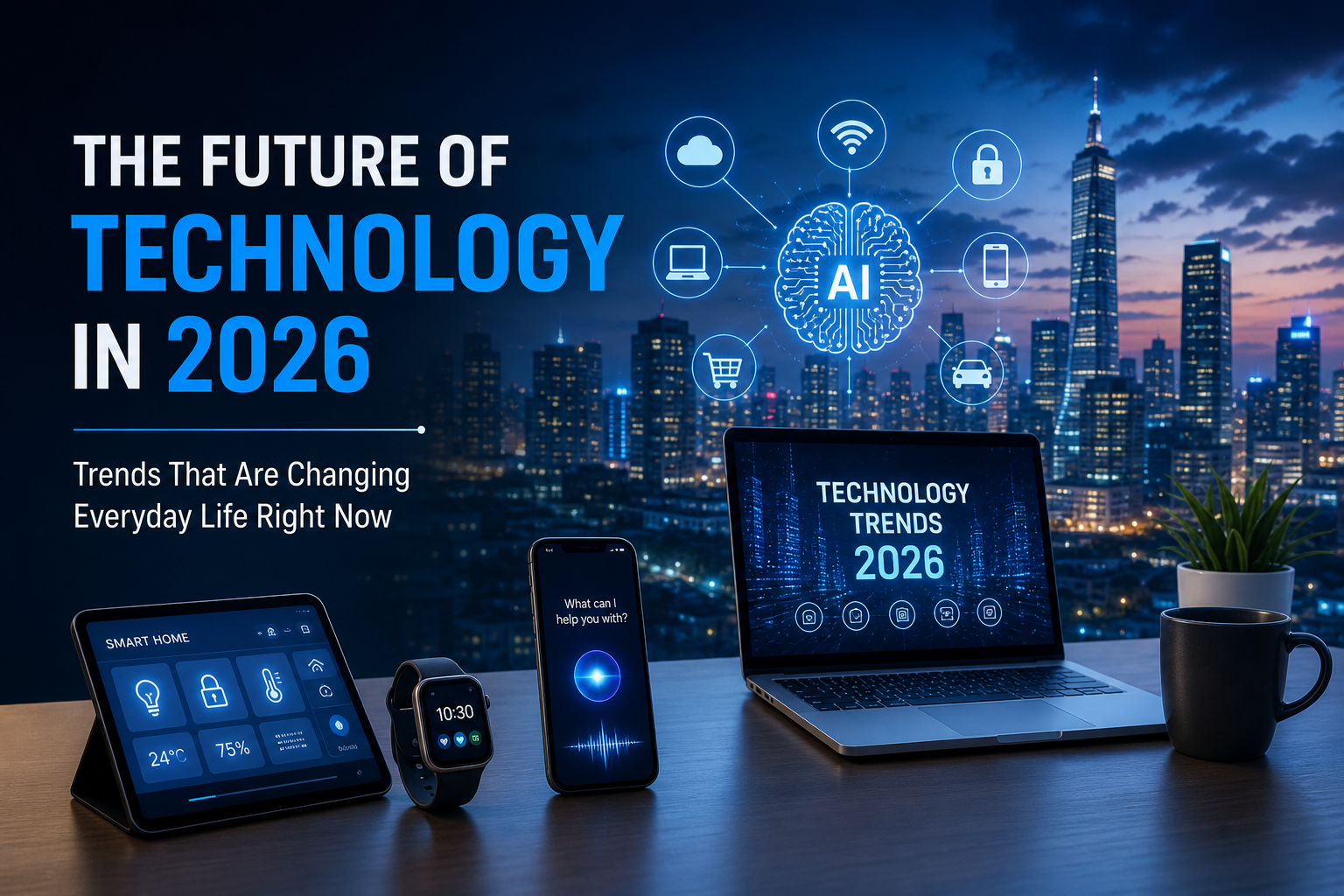
Technology is no longer something we think about separately—it has become part of how we live, work, and make decisions every day. What makes 2026 different is not just the speed of innovation, but how deeply technology is integrated into ordinary life.
From the way people communicate to how businesses operate and individuals manage their time, technology is shaping behavior in subtle but powerful ways. The most important trends today are not just about new inventions—they are about how these innovations are actually being used.
Understanding these trends is important, not just for staying updated, but for using technology in a way that adds real value to everyday life.
Artificial Intelligence in Daily Use
Artificial intelligence is no longer limited to advanced industries. It is now present in everyday tools such as search engines, mobile applications, and digital assistants.
What makes this trend important is how quietly it works in the background. AI helps:
- Recommend content
- Improve search results
- Automate routine tasks
For example, many apps now learn user behavior over time, making interactions faster and more personalized. However, this also raises questions about data usage and control.
The real impact of AI is not just automation—it is how it changes decision-making by influencing what people see and choose.
Smart Devices and Connected Living
Smart devices are becoming more common in homes and workplaces.
From smart TVs and wearable devices to connected home systems, technology is creating an environment where devices communicate with each other.
This offers convenience, such as:
- Automated lighting and appliances
- Health tracking through wearables
- Remote control of devices
However, it also increases the importance of security and privacy, as more devices mean more data and potential vulnerabilities.
The Rise of Remote Work and Digital Collaboration
Technology has transformed how people work.
Remote work is no longer a temporary solution—it has become a standard option in many industries. Digital tools now allow teams to collaborate, communicate, and manage projects from different locations.
This shift has created flexibility but also new challenges:
- Managing time effectively
- Avoiding constant connectivity
- Maintaining work-life balance
Technology enables remote work, but managing it requires discipline and awareness.
Digital Payments and Cashless Systems
Financial technology has made transactions faster and more convenient.
Digital payments are now widely used for:
- Shopping
- Bill payments
- Transfers
This reduces the need for cash and simplifies daily transactions. However, it also requires users to be more careful about security and spending habits.
The ease of payments can sometimes lead to less awareness of spending, making financial discipline more important.
Cybersecurity Awareness as a Priority
As technology grows, so do risks.
Cyber threats are no longer limited to large organizations. Everyday users are now targets of phishing, scams, and data breaches.
This has made cybersecurity awareness a key part of using technology. Simple practices such as:
- Using strong passwords
- Avoiding suspicious links
- Keeping devices updated
can prevent many common threats.
Technology offers convenience, but it also requires responsibility.
Information Overload and Digital Balance
One of the biggest challenges of modern technology is managing information.
With constant notifications, updates, and content, users are exposed to more information than ever before. While this provides opportunities to learn, it can also lead to distraction and reduced focus.
Maintaining digital balance involves:
- Limiting unnecessary usage
- Prioritizing meaningful content
- Taking breaks from screens
Using technology effectively is not just about access—it is about control.
The Importance of Adaptability
Technology changes quickly, and staying updated is important.
However, this does not mean following every trend. It means understanding what is relevant and adapting when necessary.
Learning how to use new tools, understanding risks, and staying informed helps individuals remain confident in a changing environment.
Technology as a Tool, Not a Replacement
A common misconception is that technology replaces effort. In reality, it supports it.
Technology can improve productivity, simplify tasks, and provide access to information, but it cannot replace critical thinking or decision-making.
Using technology effectively means combining it with awareness and judgment.
Conclusion
The future of technology is not just about innovation—it is about integration.
As technology becomes part of everyday life, the focus should shift from using more tools to using them better. By understanding current trends and maintaining balance, individuals can benefit from technology without becoming dependent on it.
The goal is not to keep up with every change, but to use technology in a way that improves quality of life.
Frequently Asked Questions
1. What are the biggest technology trends in 2026?
Some of the biggest trends include artificial intelligence in everyday apps, smart devices, remote work tools, digital payments, and increased focus on cybersecurity.
2. How is technology affecting daily life?
Technology is making daily tasks faster and more convenient, improving communication, and providing easy access to information. However, it also increases dependency and requires responsible usage.
3. Is artificial intelligence safe to use?
Artificial intelligence is generally safe when used properly, but users should be aware of data privacy and how their information is being used.
4. Why is cybersecurity important today?
Cybersecurity is important because more personal and financial activities are done online, making individuals vulnerable to cyber threats.
5. How can I stay updated with new technology trends?
You can stay updated by following reliable sources, observing changes in everyday tools, and continuously learning about new developments.
6. Are smart devices secure?
Smart devices are generally secure but can become vulnerable if not updated or properly configured. Basic security practices help reduce risks.
7. Can technology improve productivity?
Yes, technology can improve productivity by automating tasks, organizing work, and improving communication when used correctly.
8. How can I maintain balance while using technology?
You can maintain balance by limiting screen time, managing notifications, and focusing on meaningful usage instead of constant engagement.

